the family integration model
recovery is a family journey
At Galen Hope, we believe that healing from an eating disorder doesn’t happen in isolation. It happens within the context of relationships, family, and community. That’s why we developed the Family Integration Model (FIM), a comprehensive approach to involving caregivers and support people in treatment at every stage of the recovery process.
Our model is grounded in research and clinical experience. It’s designed for everyone, whether the patient is an adolescent or an adult, and whether the family consists of parents, a spouse or partner, siblings, and/or close friends.
why family involvement matters
Eating disorders affect the entire family system. Caregivers often experience significant stress, uncertainty, and isolation while trying to support a loved one through recovery, often without the tools or guidance they need.
Research consistently shows that family involvement improves treatment outcomes. Yet historically, family-inclusive treatment has been difficult to deliver in higher levels of care, such as partial hospitalization (PHP) and intensive outpatient (IOP) programs, especially when patients travel from out of town or out of state for treatment.
The Family Integration Model was built to close that gap.
a model backed by research
Our team published findings on the Family Integration Model in the peer-reviewed journal Behavioral Sciences (2026), evaluating outcomes for 137 adults and 61 adolescents treated at Galen Hope.
KEY FINDINGS INCLUDED:
- Significant reductions in eating disorder symptoms for both adults and adolescents
- Significant improvements in depression for both age groups
- Significant improvements in anxiety among adult patients
- Strong outcomes even among patients who entered treatment with high-severity symptoms
- High caregiver satisfaction across all aspects of Family Day programming
core pillars of the model
The Family Integration Model is built on four core pillars that guide every aspect of how we engage families throughout treatment:

connection
Families actively participate in healing through weekly therapy, multifamily groups, and monthly Family Days. We place strong emphasis on building relational trust, improving communication, and reducing the isolation so many caregivers feel.
education
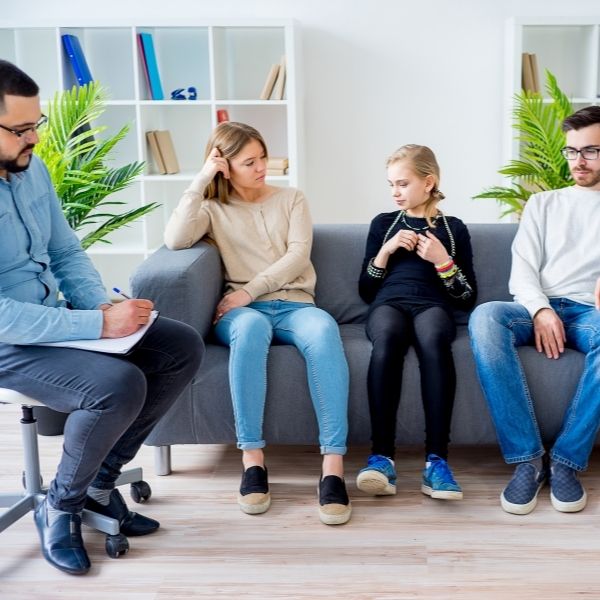
Families receive education on eating disorders, mental health, trauma, and co-occurring conditions, along with skills-based caregiver coaching that equips them with practical tools to use in their daily lives.

collaboration
Families are not kept on the sidelines. They participate directly in treatment planning and care coordination, with clear feedback loops between the patient, family, and treatment team.
continuity
Recovery doesn’t end at discharge. To help sustain progress and reduce relapse risk, we provide structured support during the transition out of PHP or IOP, including step-down planning, alumni family groups, and post-discharge follow-ups.
how the model works
These four pillars come to life through several core programs:
FAMILY THERAPY
Weekly family sessions with the patient focus on understanding the function of the eating disorder, building communication skills, setting and holding healthy boundaries, and learning practical therapeutic tools.
CAREGIVER COACHING
Caregivers meet privately, without the patient present, for weekly one-on-one coaching. This dedicated time allows caregivers to process their own emotions, learn practical skills, and practice new ways of responding to their loved one, including through role-play and real-world scenarios.
CAREGIVER SUPPORT GROUP
This bi-weekly virtual support group is for the caregivers of all patients in our care and provides a safe space for them to share about and process their common experience of having a loved one in treatment. The group offers education on evidence-based treatment models alongside space to talk about the specific challenges they are navigating and to support each other.
DIALECTICAL BEHAVIORAL THERAPY (DBT) FOR CAREGIVERS
This component provides coaching, exposure exercises, and guidance on how to apply DBT techniques directly within the caregiver’s relationship with their loved one, helping families respond more effectively—even in difficult moments.
MONTHLY FAMILY DAY
A full-day experience combining educational programming, process-oriented groups, and multifamily group sessions. Families come together to learn, connect with one another, and feel less alone in their experience.
MALE LOVED-ONE GROUP
A dedicated series of group sessions exploring the unique experience of being a male support person for someone in treatment, offering space to connect with others navigating similar dynamics
about family day
Once a month, families come together to learn, connect with one another, and feel less alone in their experience. The full day of interactive programming includes:
- Educational groups led by our clinical team
- A multifamily group connecting families with one another
- An experiential, supported lunch
- A dedicated family process groupth a Registered Dietitian
Most families attend Family Day in person, even traveling from out of town, though virtual participation is available for those who can’t be there physically.
“Galen Hope goes to extraordinary lengths to engage client families at every step of the process.”
—Family Day Participant
you don’t have to go through this alone
Caring for someone with an eating disorder is a hard thing for a family can go through. The Family Integration Model exists because we believe caregivers deserve support, education, and community—not just left out, given instructions to follow from the sidelines, or pathologized.
Families who go through this program with us often describe a powerful shift: from feeling helpless and isolated to feeling informed, connected, and equipped to support their loved one’s recovery long after treatment ends.
learn more
If your family is considering treatment for a loved one with an eating disorder, we invite you to learn more about how Galen Hope integrates families into every step of the healing process. You can reach out to schedule a free consultation with our team, and we also offer weekly virtual information sessions for families and loved ones who want to learn more about our approach to care.